
Load ports
- Dalian
- Tianjin / Xingang
- Qingdao
- Shanghai
- Ningbo
- Inland rail ramps in China
China to Russia and Central Asia
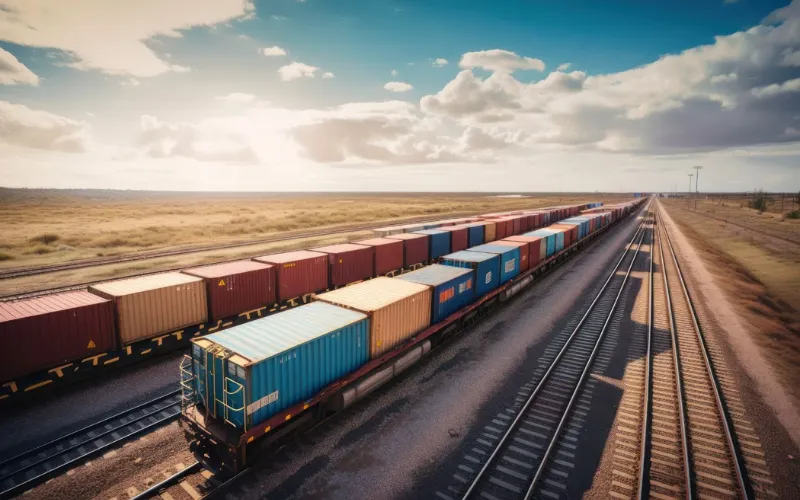
Yihang Shipping’s primary path to Russia and Central Asia is rail, with door-to-station and station-to-door options and tracking on the move. On the lanes where rail replaces the ship, transit can be up to 40% shorter than the sea route. Ocean and truck still exist when the terminal or the cargo says so. The quote states which path is actually open.
Planning note
Without CBM, the table on this page is the whole answer. With CBM, we point at one mode and draft the quote.
Request this quoteWindows below are how the trade plans the move. They are not a Yihang booking.
| Mode | Planning window | When it fits |
|---|---|---|
| Rail | The default. Where rail replaces the sea route, transit can be up to 40% shorter. The quote names the stations. | Most commercial cargo on this lane. |
| Truck at either end | The road leg to the ramp, or from the arrival station to the door. | When the shipper or consignee is not at the terminal. |
| Ocean, when it is the better tool | Used if the rail path is not the right one for the commodity or the week. | Cargo that should stay on a vessel instead of a train. |
A deep-sea transit is not the product. Rail is priced against the date and the station, and the 40% comparison only applies where rail actually replaces that sea leg.
Commodity, packing, and documents are checked before the box goes to the ramp. A wrong description stops the train the same way it stops a vessel.
Station-to-door and door-to-station are different jobs. Say which end has a truck, and who meets the container.
On the lanes Yihang runs, rail can cut transit by up to 40% compared with the sea route. That is a comparison for those lanes, not a promise for every city pair. The quote says whether your cargo is one of them.
Both. Door-to-station, station-to-door, and a truck at either end are booked as part of the same file. Write the actual addresses, not only the country.
Yes. Inland trucking connects the factory to the rail ramp, and the export file is prepared before the box is handed over.
Anything restricted, mis-declared, or packed so it cannot be secured. Tell us the commodity first. If rail will not take it, the quote will say so instead of forcing the booking.
Origin city, destination station or door, commodity, weight and size, packing, and the date it can leave the factory.
FCL, LCL, and air freight from China, including Dalian, to US ports and doors. Yihang quotes the lane with the port, the mode, and what the rate includes.
Canada Ocean FCL · Ocean LCL · Air freightOcean and air freight from China to Vancouver and on to Toronto, Montreal, and other Canadian doors. One quote covers the sailing and the inland leg.
Singapore Ocean FCL · Ocean LCL · Air freightShort-sea FCL and LCL, plus air, from China to Singapore. North China cargo, including Dalian, is planned with the feeder connection included.
Australia Ocean FCL · Ocean LCL · Air freightOcean FCL, LCL, and air from China to Sydney, Melbourne, Brisbane, Adelaide, and Fremantle. Planning windows only. No published freight rates.
Europe Ocean FCL · Ocean LCL · RailOcean freight to North Europe, rail when the vessel is too slow, and air when the date is real. Quoted from China, including Dalian.